Merino Wool Sleepwear vs Cotton vs Polyester: Which Fabric Helps You Sleep Longer?
- Share
- publisher
- CraftYourWear Editorial Team
- Issue Time
- Nov 4,2026
Summary
Peer-reviewed sleep research from the University of Sydney shows merino wool sleepwear helps you fall asleep faster and sleep more soundly than cotton or polyester. This guide compares the three fabrics on temperature regulation, moisture management, and comfort, explains why superfine merino blends work for all seasons and sensitive skin, and shows what to look for in a quality sleepwear set for personal wear or private label production.
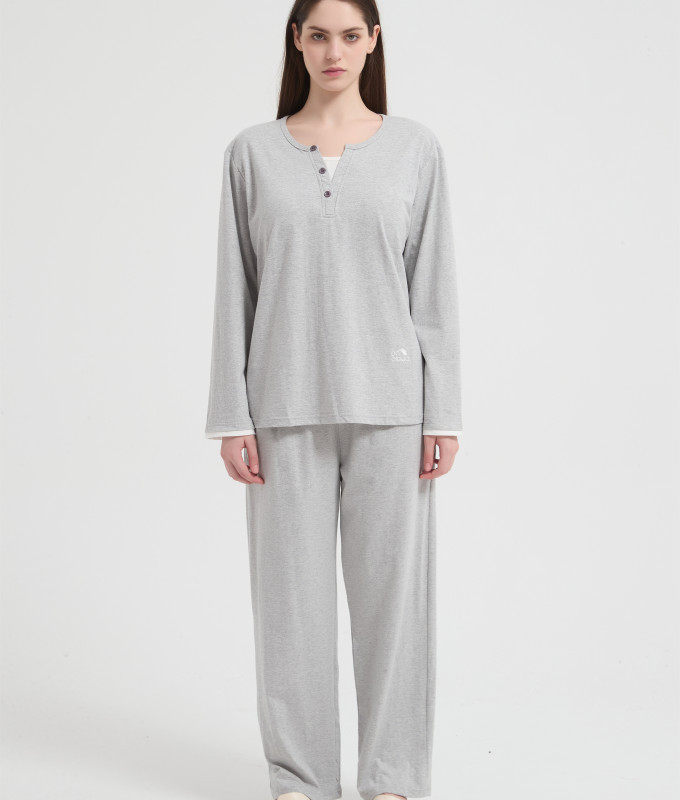
Sleep Science · Fabric Guide
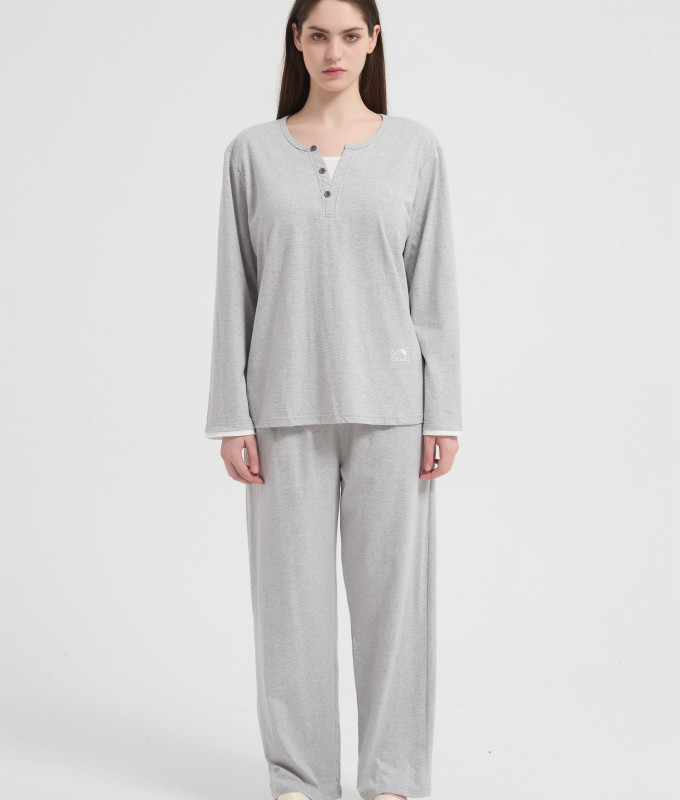
Merino wool sleepwear has quietly become the fabric of choice for people who take their sleep seriously — hot sleepers, light sleepers, and anyone who has ever woken at 3 a.m. feeling clammy and restless. But is wool really better than the cotton and polyester sleepwear most of us grew up wearing? The answer, backed by polysomnography research from the University of Sydney, is more interesting than you might expect.
In this guide, we compare the three most common sleepwear fabrics on the metrics that actually matter for sleep: temperature regulation, moisture management, and how quickly you drift off. We'll also show you what to look for in a quality merino wool blend set — and how our own Merino Wool Blend Sleepwear Collection is built around these findings.
Why Your Sleepwear Fabric Matters More Than You Think
Here's something most people never learn: your body needs to cool down to fall asleep. As bedtime approaches, your core temperature naturally drops, signaling your brain that it's time for rest. Sleep experts generally recommend keeping your bedroom between 18–22°C (64–72°F) to support this process.
The fabric wrapped directly against your skin is part of that equation. Sleepwear sits in the "microclimate" between your body and the air — and different fabrics manage heat and humidity in that microclimate very differently. Trap too much heat or moisture, and your body struggles to stay in what researchers call the thermal comfort zone. The result: longer time to fall asleep, more nighttime awakenings, and more fragmented rest.
"Wool helps regulate your body temperature, keeping you in what is known as 'the thermal comfort zone' for longer. You therefore not only fall asleep quicker, but also have deeper, less fragmented sleep."
What the Research Actually Says: The University of Sydney Sleep Studies
This isn't marketing copy — it's peer-reviewed sleep science. Researchers at the University of Sydney's Charles Perkins Centre, in research supported by Australian Wool Innovation (The Woolmark Company), ran randomized crossover sleep studies comparing merino wool, cotton, and polyester sleepwear using polysomnography — the gold-standard clinical measurement of sleep.
Study 1: Older adults in warm conditions (30°C)
In a 2019 study published in Nature and Science of Sleep, 36 healthy adults aged 50–70 wore each type of sleepwear across four nights of monitored sleep at a warm 30°C and 50% humidity. The results were striking:
- Falling asleep: participants aged 65+ fell asleep in about 12 minutes in wool — versus 27 minutes in cotton and 22 minutes in polyester.
- Sleep fragmentation: wool wearers had fewer sleep disturbances per hour (12.1) than polyester wearers (13.7).
- Poor sleepers: participants with poor sleep quality (PSQI ≥ 5) spent less time awake after falling asleep in wool compared to cotton.
Study 2: Young adults in cooler conditions (17°C & 22°C)
An earlier Sydney study monitored 17 healthy young adults across nine nights. Wearing superfine merino wool, they fell asleep in about 11 minutes on average versus 15 minutes in cotton — and spent more time in deep sleep (stage N3) at the cooler temperature. Notably, wool bedding showed no such effect; it's the direct skin contact of sleepwear that makes the difference. That's exactly why the fabric of your sleepwear set matters more than the fabric of your blanket.
Fabric by Fabric: Merino Wool vs Cotton vs Polyester
Even without a sleep lab, the physics of each fibre explains a lot:
Merino wool: the active temperature manager
Merino fibre is a natural humidity buffer. It absorbs moisture vapour from your skin, holds it inside the fibre, and releases it as conditions change — keeping the microclimate drier and more stable through the night. It also absorbs up to 35% of its dry weight in moisture vapour, compared to around 24% for cotton and under 1% for polyester. And unlike the scratchy wool sweaters of decades past, superfine merino (fibres finer than 18.5 microns) is soft enough for direct skin contact — clinical research even suggests it's well tolerated by people with sensitive skin and eczema.
Cotton: the reliable all-rounder — until you sweat
Cotton is soft, affordable, and breathable, and for mild conditions it's perfectly fine. Its weakness is saturation: cotton holds moisture in the fabric itself, so during heavy sweating it becomes damp and clingy against your skin — pulling heat away from your body at exactly the wrong moments.
Polyester: warm and quick-drying, but passive
Polyester is durable, cheap, and dries fast. But as a synthetic fibre it absorbs very little moisture and can't buffer humidity swings. In the Sydney studies, polyester sleepwear was associated with more fragmented sleep and — for poor sleepers — longer time to reach REM sleep than wool or cotton.
| Factor | Merino Wool | Cotton | Polyester |
|---|---|---|---|
| Temperature regulation | Active — buffers both heat and humidity | Moderate — breathable but passive | Low — traps heat, no buffering |
| Moisture management | Absorbs ~35% of dry weight, stays dry to touch | Absorbs ~24%, then feels wet and clingy | <1%, sweat sits on skin |
| Sleep onset (research) | Fastest in both warm & cool studies | Slowest in warm conditions | Middle; more fragmented sleep |
| Odour resistance | Naturally odour-resistant, fewer washes | Holds odour, washes after each wear | Prone to retaining odour |
| Sensitive skin | Superfine merino (<18.5µm) clinically well tolerated | Generally well tolerated | Can irritate with friction |
| Seasonality | All-season (insulates when cool, breathes when warm) | Warm-weather friendly | Depends on construction |
Why We Recommend a Merino Blend for Sleepwear
You'll notice our sleepwear collection is a merino wool blend rather than 100% wool — that's a deliberate engineering choice, not a cost cut. Blending superfine merino with complementary fibres improves machine washability, shape retention, and softness while keeping merino's signature temperature and moisture regulation. Depending on the market and budget, blends can also incorporate silk, organic cotton, or performance synthetics — which is why our custom merino wool knitwear program lets brands specify their own yarn composition.
Each piece in our Merino Wool Blend Sleepwear Collection is designed around the same principle: keep the wearer inside the thermal comfort zone, all night, in any season.
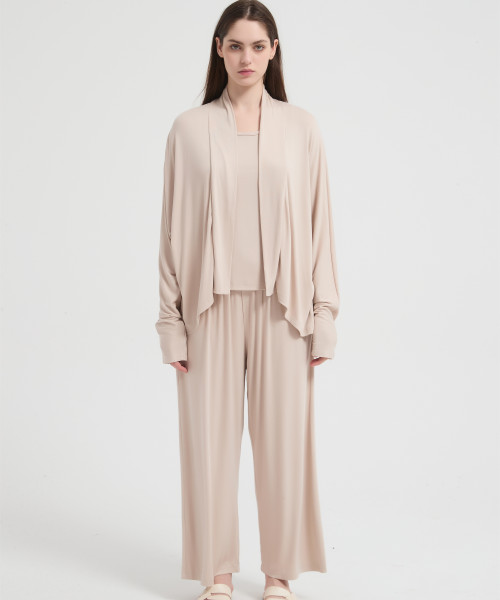
- Women's merino wool blend sleepwear set — relaxed pullover and loose trousers for cozy sleep and daily lounging.
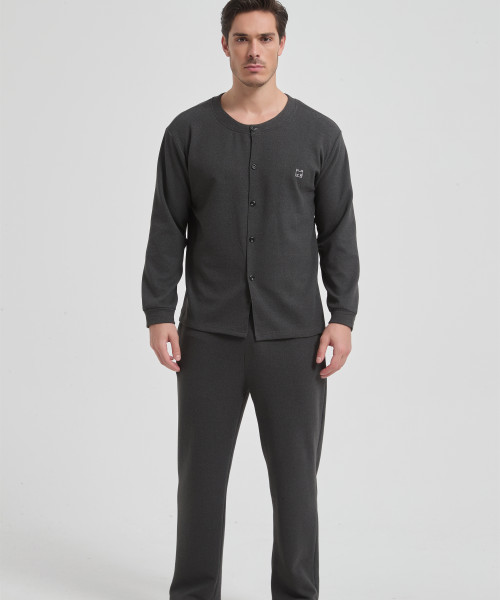
- Men's merino wool sleep loungewear set — soft, breathable knit with natural temperature regulation.
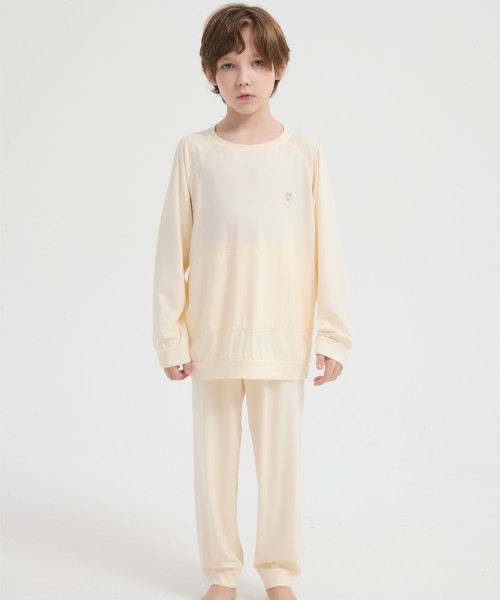
- Kids' thermal sleepwear set — anti-itch, breathable, and gentle on young skin.
- Custom 3-piece sleepwear set — for brands building a private-label sleepwear line.
Who Benefits Most from Merino Wool Sleepwear?
Based on the research and our experience with customers, merino wool sleepwear tends to deliver the biggest wins for:
- Hot sleepers and night sweats sufferers — superior moisture buffering keeps the skin microclimate dry.
- Older adults — the Sydney study's largest gaps (12 vs 27 minutes to fall asleep) were in the 65+ group.
- Poor sleepers — wool reduced wakefulness after sleep onset compared to cotton.
- People with sensitive skin or eczema — superfine merino (<18.5 microns) is clinically well tolerated.
- Frequent travellers — naturally odour-resistant, so it stays fresher between washes.
How to Choose a Quality Merino Wool Sleepwear Set
A few practical checks before you buy — for yourself, or when sourcing for your own brand:
- Fibre fineness: look for superfine merino (under 18.5 microns) for next-to-skin softness.
- Blend composition: a thoughtful merino blend adds washability and durability; ask what the blend is and why.
- Knit weight: lightweight single jersey for all-season use; heavier gauges for winter thermal positioning.
- Construction: flatlock seams and tagless labels matter enormously for overnight comfort.
- Certification: ask for OEKO-TEX or equivalent fibre verification — 71% of consumers say independent certification matters to them.
Frequently Asked Questions
Is merino wool sleepwear itchy?
No — not if it's superfine. Itch comes from coarse fibres (over ~22 microns) that prick the skin. Superfine merino fibres (under 18.5 microns) bend against the skin instead of pricking it, and clinical studies show they're well tolerated even by people with eczema. Our kids' sleepwear, for example, is specifically designed to be anti-itch.
Can you wear merino wool sleepwear in summer or hot climates?
Yes — this surprises people. The Sydney research was conducted at a warm 30°C, and wool still outperformed cotton and polyester. Because merino buffers both heat and humidity, lightweight merino blends work year-round, including in air-conditioned or warm bedrooms.
How do you wash merino wool sleepwear?
Most merino wool blend sleepwear is machine washable on a gentle, cool cycle with wool-safe detergent — the blend improves washability versus 100% wool. Avoid bleach and tumble drying on high heat. Thanks to natural odour resistance, you'll also wash it far less often than cotton.
Is merino wool sleepwear suitable for private label brands?
Absolutely — sleepwear is one of the fastest-growing merino categories, and consumer search interest in merino wool has more than doubled globally in five years. We support OEM/ODM development, custom yarn blends, logo placement, woven labels, hang tags, and branded packaging with a typical 3–5 week production lead time. Contact our team to start a custom project.
Sleep Better Tonight — Or Build Your Own Sleepwear Line
Whether you're choosing a merino wool blend sleepwear set for yourself, or you're a brand looking to launch a private-label merino sleepwear collection with low MOQ and 3–5 week delivery, our team is ready to help from yarn selection to packaging. Contact Us →